Understanding the energy budget of Earth is essential for grasping how energy flows through our planet’s systems. The Blank Earth’s Energy Budget Worksheet is a valuable educational tool designed for students to explore and comprehend the various components of Earth’s energy budget. This resource is ideal for middle school students learning about energy balance, climate science, and environmental studies.
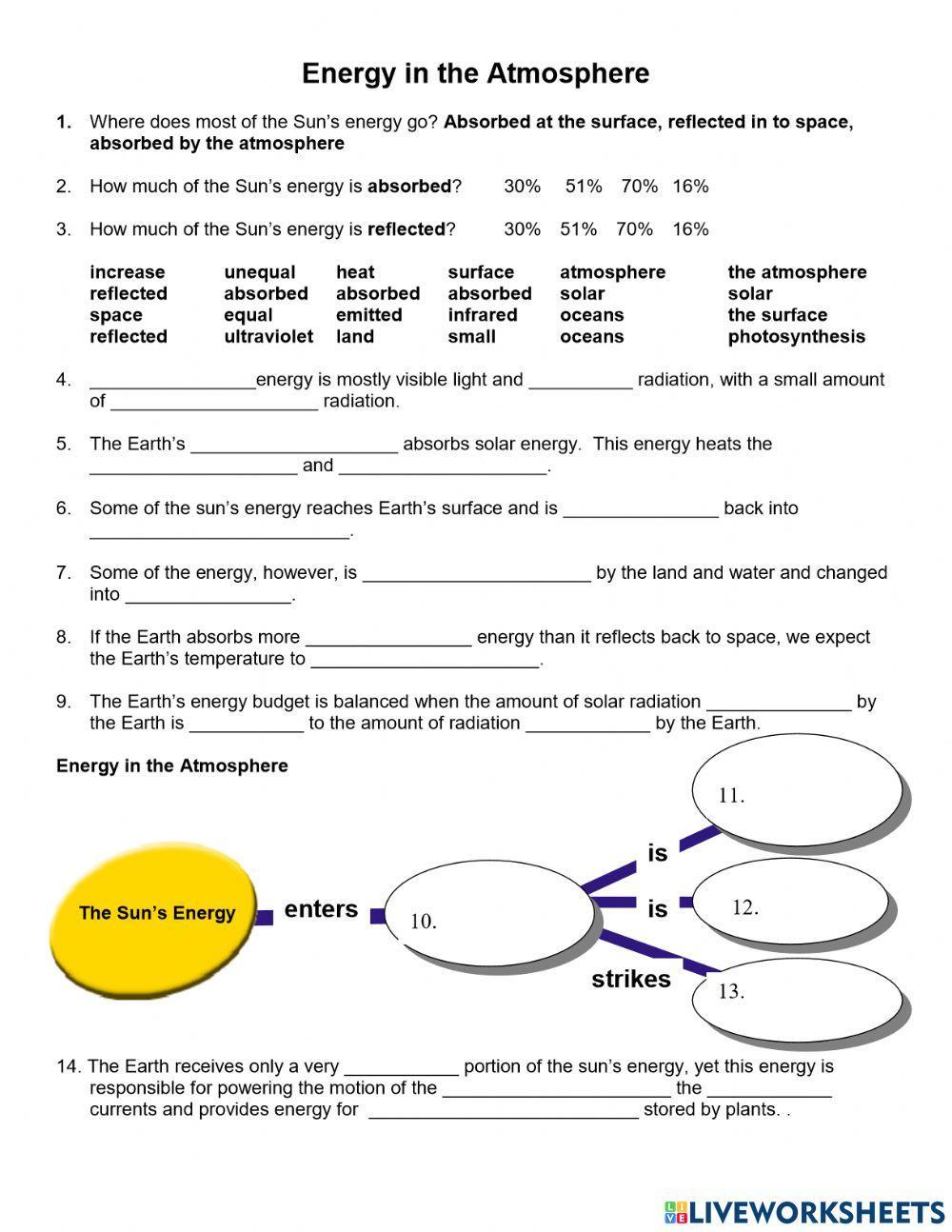
Overview of the Blank Earth’s Energy Budget Worksheet
The Blank Earth’s Energy Budget Worksheet is structured to facilitate the understanding of energy inputs and outputs on Earth. It typically includes sections for students to fill in data related to solar energy, reflected energy, absorbed energy, and energy lost to space. This worksheet can be used in various educational settings, such as classrooms, homeschooling environments, or even for independent study.
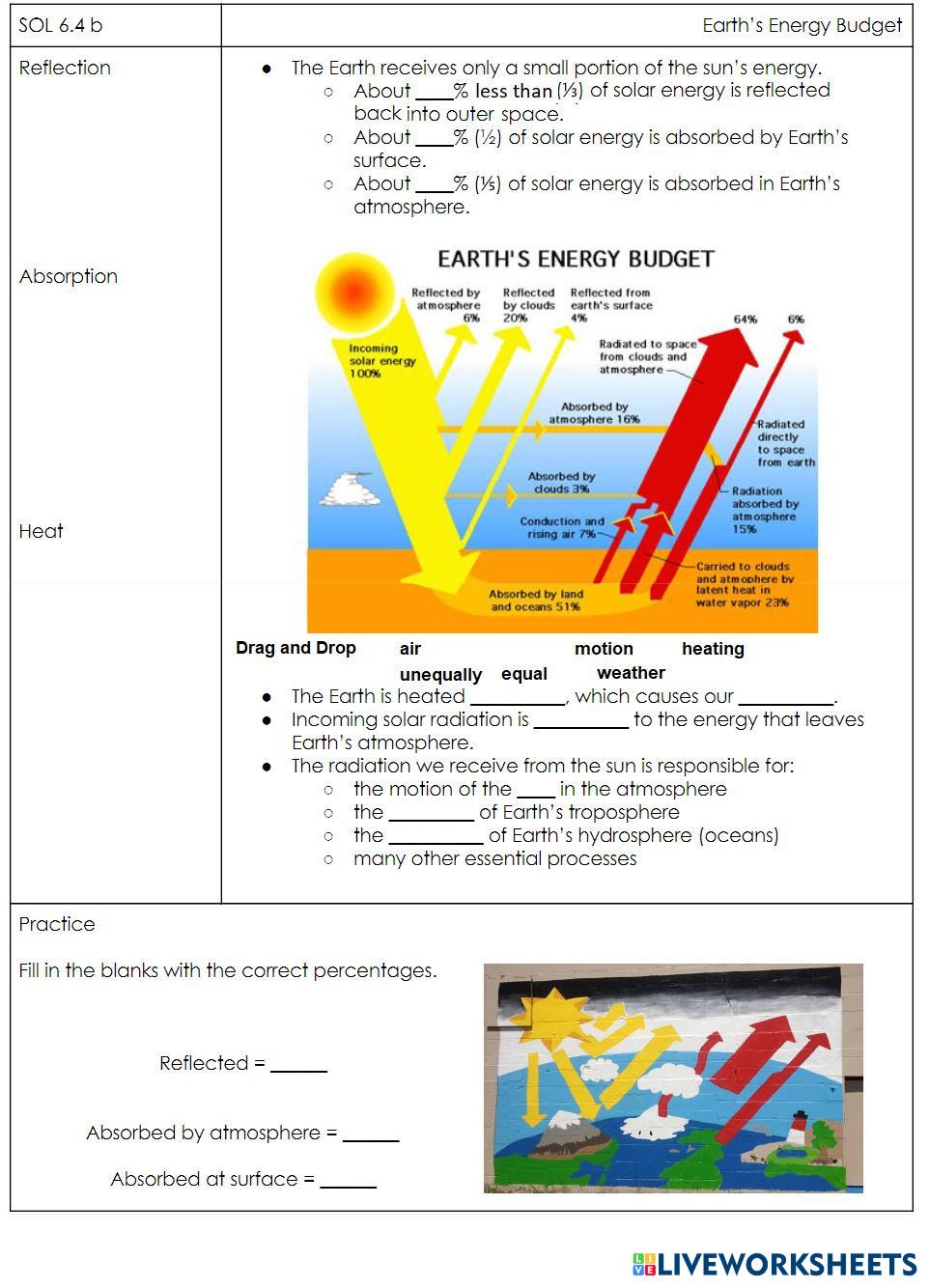
By working through this worksheet, students can visualize how energy from the sun interacts with Earth’s atmosphere, land, and oceans. This understanding is crucial for discussions about climate change, renewable energy, and environmental stewardship.
Key Components of the Worksheet
When utilizing the Blank Earth’s Energy Budget Worksheet, it’s beneficial to focus on the following components:
- Solar Energy Input: Students will learn about the amount of solar energy that reaches the Earth’s surface, which is vital for photosynthesis and climate regulation.
- Reflected Energy: This section allows students to understand how much solar energy is reflected back into space, contributing to Earth’s overall energy balance.
- Absorbed Energy: This part emphasizes the energy retained by the Earth, which is crucial for maintaining temperatures and supporting life.
- Energy Lost to Space: Students analyze what happens to energy that escapes back into space, reinforcing the concept of energy conservation.
- Energy Budget Calculation: Finally, students can calculate the differences between the energy absorbed and lost, fostering critical thinking about energy management.
How to Utilize the Worksheet Effectively
To make the most of the Blank Earth’s Energy Budget Worksheet, consider the following strategies:
Spaced Repetition
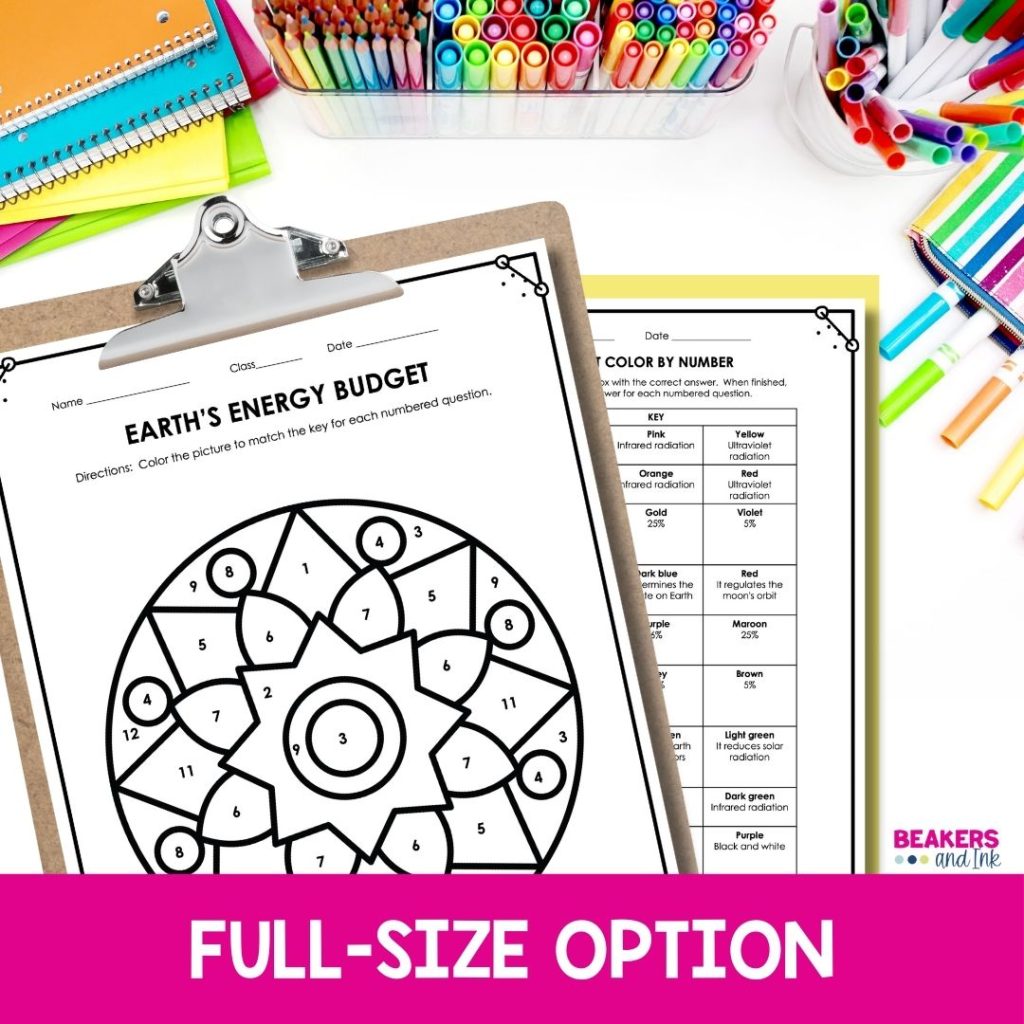
Instead of completing the worksheet in one sitting, break it into sections to facilitate deeper understanding. For example, dedicate one day to discussing solar energy input and its significance, then revisit the worksheet the next day to tackle reflected energy. This spaced repetition allows students to absorb and retain information more effectively.
Group Activities
Consider using the worksheet in a collaborative setting. Group activities can enhance learning by allowing students to discuss their findings and compare their calculations. This approach not only promotes teamwork but also reinforces the material through peer learning.
Integration With Other Subjects
Link the energy budget concepts to other subjects, such as math or geography. For example, students can practice calculations related to energy inputs and outputs, or they can explore how different geographical locations receive varying amounts of solar energy. This interdisciplinary approach enriches the learning experience.
Downloading and Printing the Worksheet
The Blank Earth’s Energy Budget Worksheet is typically available in PDF format, making it easy to download and print. Here are some practical printing tips:
- Paper Size: Use standard letter-size paper (8.5 x 11 inches) for easy printing at home or in the classroom. If you have access to larger paper, consider printing on 11 x 17 inches for a more spacious layout.
- Printer Settings: Ensure the printer is set to the correct paper size and orientation. Portrait layout generally works best for worksheets.
- Cardstock: If the worksheet will be reused or laminated, consider printing on cardstock for durability. This is particularly useful in a classroom setting where multiple students will use the same resource.