Creating and managing a budget can be a daunting task, especially for students and young adults who are just beginning to understand their finances. A well-structured budget worksheet is an essential tool that can help them track income, expenses, and savings. In this article, I’ll walk you through how to complete a budget worksheet, providing a clear step-by-step process that anyone can follow, whether in a classroom setting, at home, or during a homeschool lesson.
Understanding the Budget Worksheet
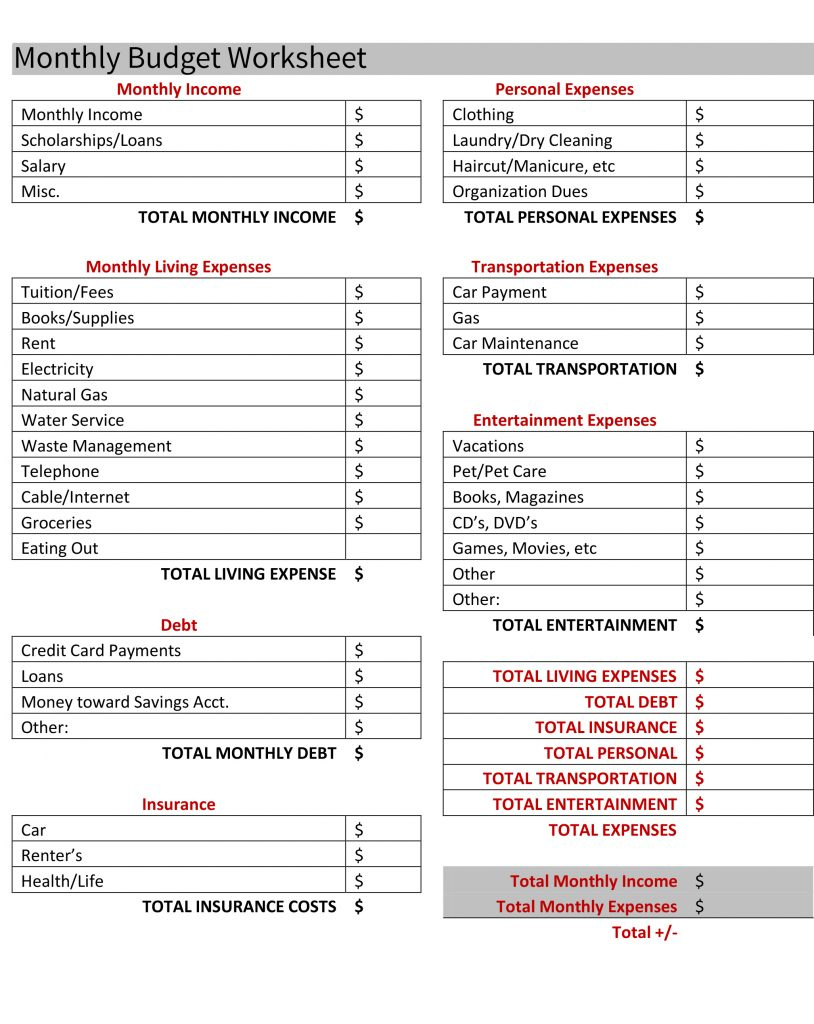
Before diving into the completion process, it’s important to understand what a budget worksheet entails. Typically, a budget worksheet includes sections for income, fixed expenses, variable expenses, savings, and sometimes debt repayment. The primary goal is to help users visualize their financial situation and make informed decisions about spending and saving.
What to Include in Your Budget Worksheet
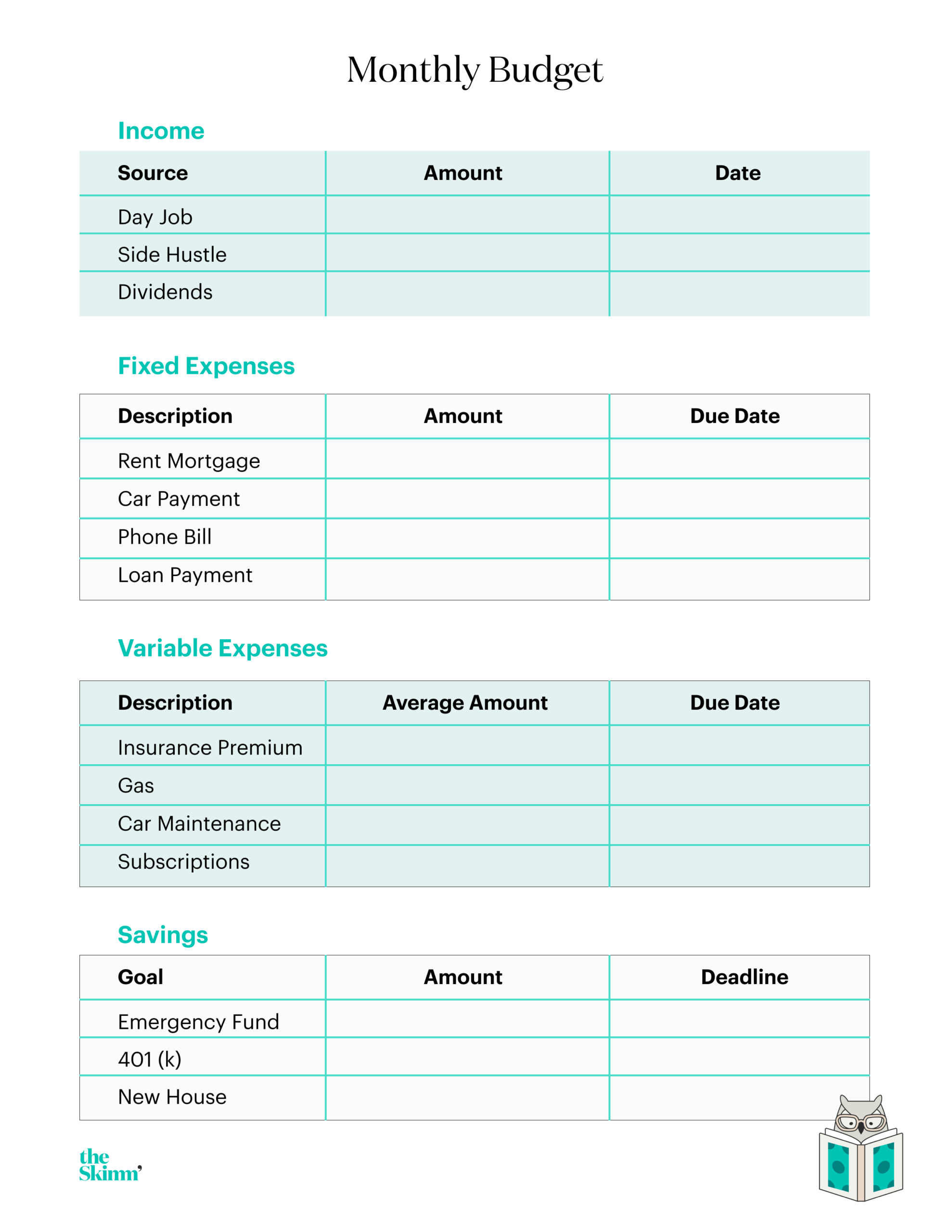
- Income Section: This area should list all sources of income, such as salary, allowances, or any side jobs.
- Fixed Expenses: These are costs that do not change from month to month, like rent, insurance, and subscriptions.
- Variable Expenses: This section covers costs that fluctuate, such as groceries, entertainment, and dining out.
- Savings Goals: It’s essential to set aside a portion of income for savings, whether for emergencies, trips, or future purchases.
- Debt Payments: If applicable, include any debt repayments, which will help in managing overall finances.
Step 1: Download the Budget Worksheet
The first step in completing a budget worksheet is to find a printable version. Many websites offer free, downloadable templates. Look for a worksheet that suits your needs—whether it’s a simple version for younger students or a more detailed one for high schoolers or adults. Make sure it’s user-friendly and visually appealing to encourage consistent use.
Tips for Choosing a Template
- Look for a layout that is easy to read and fill out.
- Ensure it includes all necessary sections mentioned above.
- Check if it’s available in PDF format to avoid formatting issues when printing.
Step 2: Print the Budget Worksheet
Once you have chosen the right budget worksheet, print it out. For best results, use standard letter-sized paper (8.5 x 11 inches) in portrait orientation. If you plan to use the worksheet multiple times, consider printing it on cardstock for durability or laminating it so it can be reused with dry-erase markers.
Printer Settings
- Set your printer to the highest quality for clarity.
- Ensure it’s configured for standard paper size to prevent any cropping.
Step 3: Gather Financial Information
Now that you have your worksheet ready, it’s time to gather the necessary financial information. Collect documents that provide details about your income and expenses, such as pay stubs, bank statements, bills, and receipts.
Data Collection Tips
- Use a recent month’s worth of expenses for accuracy.
- Keep a record of all transactions, even small ones, to get a comprehensive view of your spending patterns.
Step 4: Fill Out the Income Section
Start with the income section of your worksheet. List all sources of income clearly and concisely. If you have multiple sources, such as a job and freelance work, ensure each is accounted for. Add them up to get your total income.
Calculation Example
If you earn $1,500 from your job and $300 from freelance work, your total income for the month would be $1,800.
Step 5: Enter Fixed Expenses
Next, move to the fixed expenses section. Write down all your monthly obligations, such as rent, car payments, and insurance. Be sure to include the exact amounts as they appear on your bills.
Common Fixed Expenses
- Rent/Mortgage
- Utilities (electricity, water, internet)
- Insurance (health, car, home)
- Subscriptions (streaming services, gym memberships)
Step 6: List Variable Expenses
After you’ve filled in your fixed expenses, turn to the variable expenses section. This part requires a bit more thought, as these costs can vary month to month. Look back at your gathered data to estimate how much you typically spend on groceries, dining out, and entertainment.
Tracking Variable Expenses
- Consider using a spending tracker app or a simple notebook to monitor these expenses over time. This will make it easier to fill out this section accurately.
Step 7: Set Savings Goals
Saving money is a crucial part of budgeting. In this section, specify how much you’d like to save each month. Whether it’s for an emergency fund, a special purchase, or retirement, setting clear goals can motivate you to stick to your budget.
Example Savings Goals
- Emergency Fund: $100/month
- Vacation Fund: $50/month
- College Fund: $200/month
Step 8: Include Debt Payments
If applicable, include any debt payments in your budget worksheet. This is vital for understanding your overall financial health and ensuring you’re on track to pay off any debts.
Common Types of Debt to Include
- Student loans
- Credit card payments
- Personal loans
Step 9: Calculate the Total Expenses
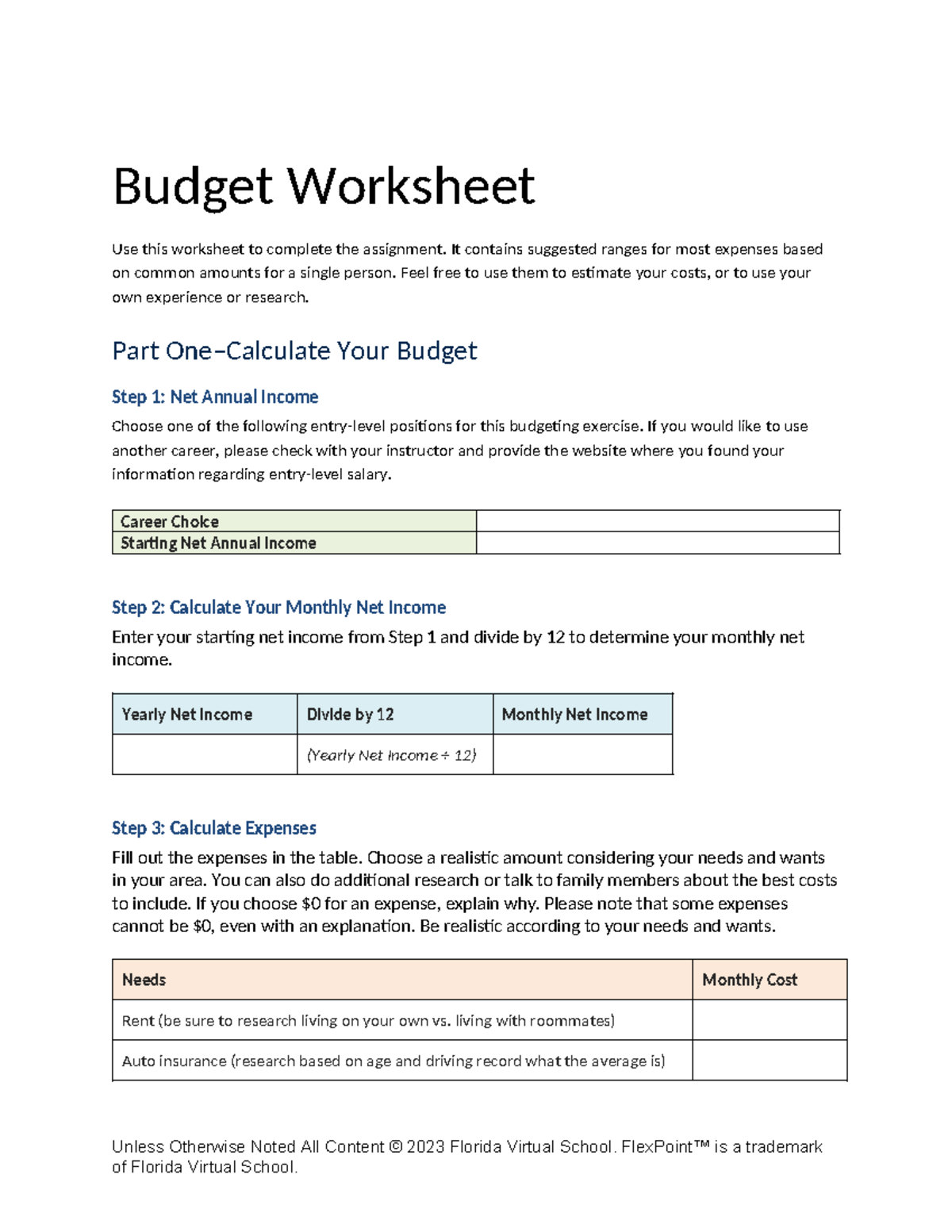
After filling in all sections, calculate your total expenses by adding your fixed and variable expenses together, along with your savings and debt payments. This total will help you see how much of your income is being allocated.
Total Calculation Example
If your total income is $1,800, and your total expenses (fixed + variable + savings + debt) equal $1,500, you have a surplus of $300.
Step 10: Review and Adjust
Finally, review your budget worksheet. If your expenses exceed your income, or if you find you’re not saving enough, it’s time to make adjustments. Look for areas where you can cut back on spending, such as dining out or entertainment.
Tips for Adjusting Your Budget
- Identify non-essential expenses that can be reduced or eliminated.
- Set realistic spending limits in variable categories to help stay within budget.
By following these steps on how to complete a budget worksheet, you can empower yourself and your students to take control of their finances. Remember, budgeting is an ongoing process, and it’s okay to make changes as your financial situation evolves. Ultimately, the goal is to create a sustainable plan that supports financial well-being and future goals.
One useful detail to remember is that reviewing your budget regularly—at least once a month—ensures you stay on track and adjust for any unexpected changes in income or expenses.