Creating a budget can be a daunting task, especially for small-business owners who juggle various expenses and income streams. The Blank Bi-Weekly Budget Worksheet stands out as a practical tool tailored to help you manage your finances efficiently. This resource is designed to streamline your budgeting process, allowing you to visualize your finances over a two-week period, which is particularly useful for businesses that operate on a bi-weekly payroll schedule.
Understanding the Layout of the Blank Bi-Weekly Budget Worksheet
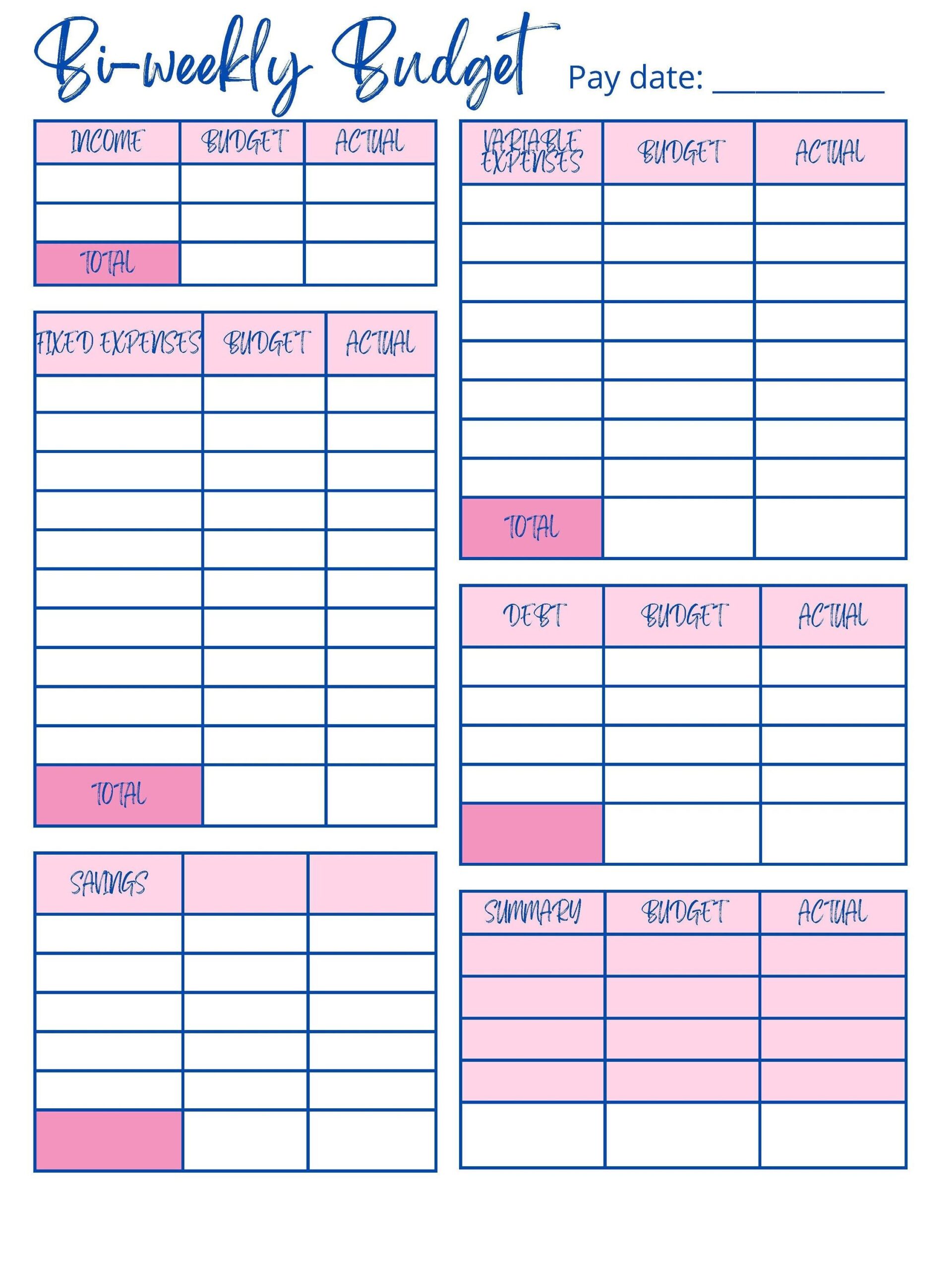
The layout of the Blank Bi-Weekly Budget Worksheet is straightforward yet effective. Typically, this worksheet is divided into several key sections: income, fixed expenses, variable expenses, and savings. Each section is clearly labeled, making it easy to identify where to input your financial data.
- Income Section: This area allows you to list all sources of income, including sales, services, or any other revenue streams. Clearly detailing your income helps you understand your financial capabilities for the upcoming weeks.
- Fixed Expenses: Here, you’ll record regular, unchanging expenses, such as rent, salaries, and utilities. This section is crucial for establishing your baseline financial obligations.
- Variable Expenses: Unlike fixed expenses, variable costs can fluctuate. This section includes categories like supplies, marketing, or unexpected costs. Keeping a close eye on these allows for better financial agility.
- Savings and Goals: This part encourages you to set aside funds for future investments or emergencies. Allocating money for savings is essential for long-term financial health.
Practical Use in Different Settings
The Blank Bi-Weekly Budget Worksheet is versatile and can be used in various settings, whether in a classroom, homeschool environment, or at home. For small-business owners, it provides a structured way to plan finances, ensuring that cash flow is monitored closely.
Classroom Applications
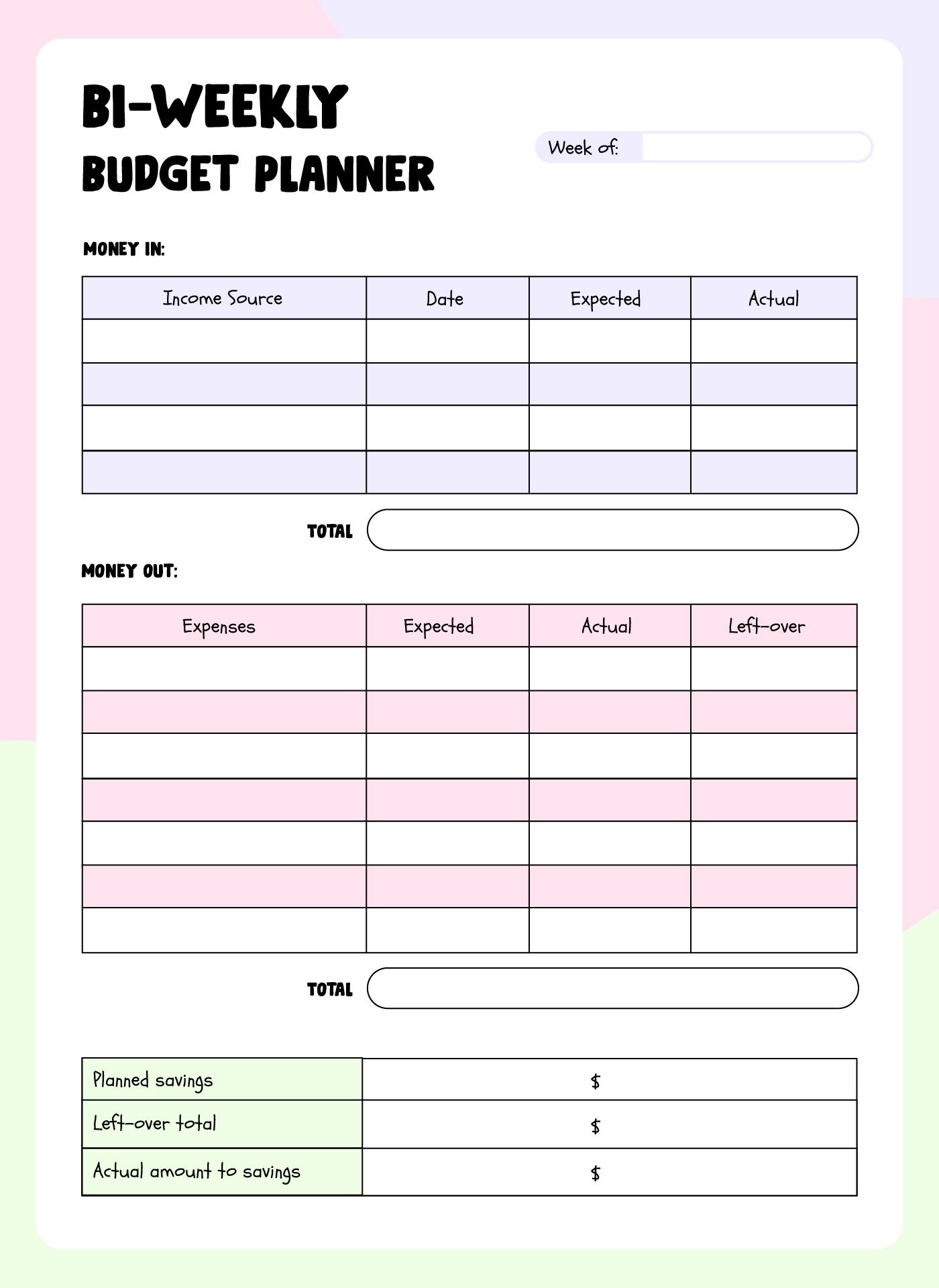
In educational settings, this worksheet can help students learn about budgeting and financial literacy. Teachers can use it as part of a lesson plan on money management, allowing students to create hypothetical budgets based on fictional income and expenses. This practical exercise not only teaches financial concepts but also prepares students for real-world financial responsibilities.
Home Use
For families managing a household budget, the Blank Bi-Weekly Budget Worksheet provides an easy-to-follow format that can foster discussions about spending and saving. Parents can involve their children in this process, teaching them valuable skills about money management early on.
Printing and Customization Options
When it comes to printing the Blank Bi-Weekly Budget Worksheet, consider the following tips:
- Paper Size: Standard letter size (8.5″ x 11″) works best for most printers. If using a home printer, ensure it is set to print on this size to avoid formatting issues.
- Material Choice: For durability, especially if the worksheet will be handled frequently, opt for cardstock. This material holds up well against wear and tear and can be laminated for repeated use.
- Color or Black and White: While color printing can enhance visual appeal, black and white printing is cost-effective. Choose based on your budget and preference.
Customization options can also enhance usability. For instance, adding personal categories or adjusting the worksheet layout can make it more relevant to specific financial situations.
Tips for Effective Budgeting With the Worksheet
To maximize the benefits of the Blank Bi-Weekly Budget Worksheet, consider these practical tips:
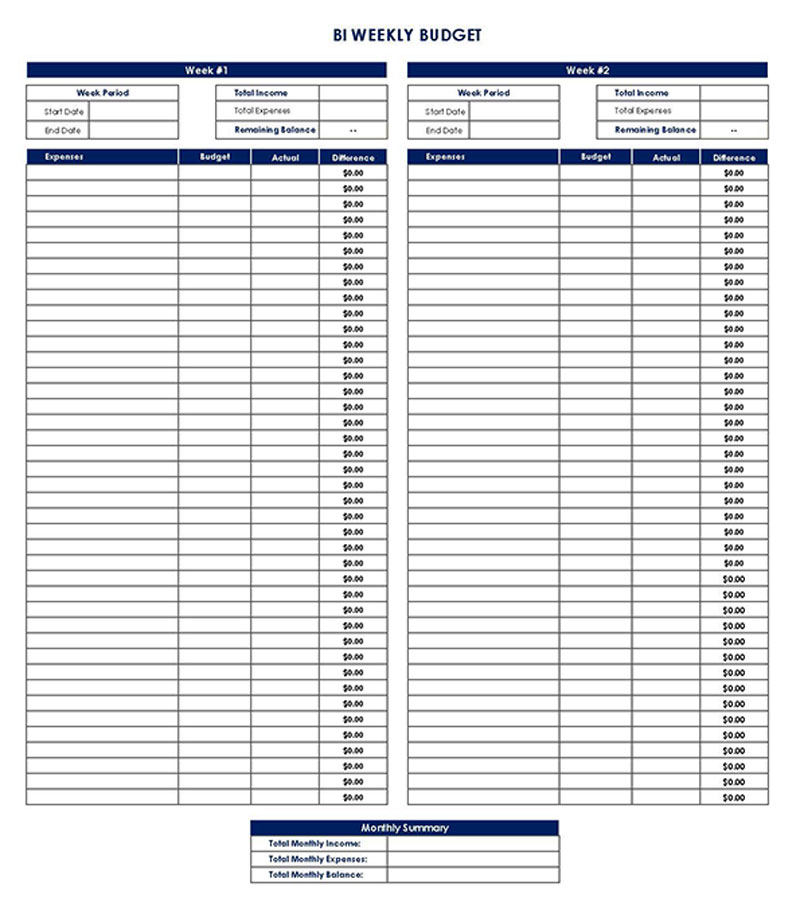
- Regular Updates: Commit to updating the worksheet regularly, ideally every two weeks. This habit ensures that you remain aware of your financial position and can make informed decisions.
- Track Actual Spending: Compare your budgeted amounts to actual spending. This practice helps identify areas where you might need to adjust your budget or spending habits.
- Set Realistic Goals: Establish achievable financial goals based on your budget. Whether it’s saving for a new piece of equipment for your business or planning for a family vacation, setting realistic targets can motivate better financial management.
- Review and Adjust: At the end of each bi-weekly period, review your budget. Assess what worked, what didn’t, and adjust for the next period accordingly. This reflective practice is essential for continuous improvement.
Using the Blank Bi-Weekly Budget Worksheet can significantly enhance financial clarity for small-business owners. By structuring finances in a manageable format, you can make informed decisions that drive your business toward success.