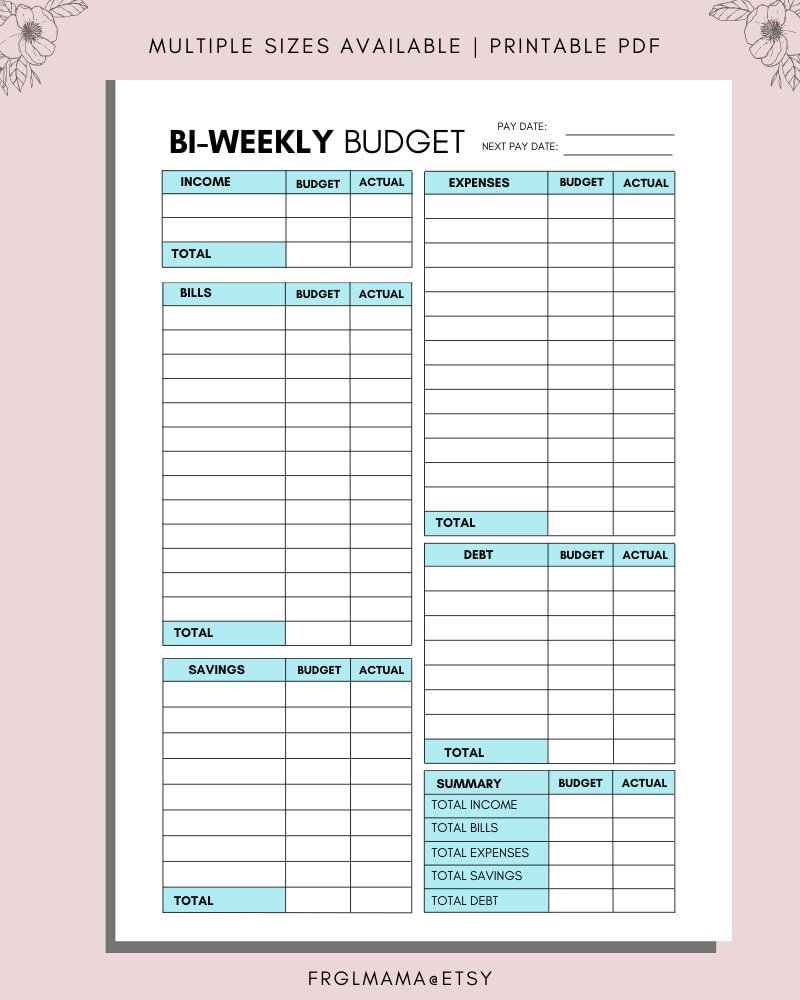
Managing finances effectively is essential for maintaining a healthy budget. A Bi-Weekly Personal Budget Worksheet can be a powerful tool to help track income and expenses over a two-week period. This resource is designed for small-business owners, freelancers, and anyone looking to gain control over their financial situation. By breaking down income and expenses into a manageable format, this worksheet allows users to visualize their financial health and make informed decisions.
Understanding the Bi-Weekly Budgeting Cycle
Before diving into the specifics of using the Bi-Weekly Personal Budget Worksheet, it’s important to understand the bi-weekly budgeting cycle. A bi-weekly budget aligns with a paycheck schedule that occurs every two weeks, which is common for many employees and business owners. This approach helps in forecasting expenses and income accurately within those two-week intervals.
Using a bi-weekly budget allows for better planning of bills that are due during that time frame. It also helps to identify patterns in spending and income, making adjustments easier. This focused approach can lead to more effective financial management, helping to ensure that funds are available for necessary expenses while also allowing for savings and investments.
How to Use the Bi-Weekly Personal Budget Worksheet
Step 1: Download and Print
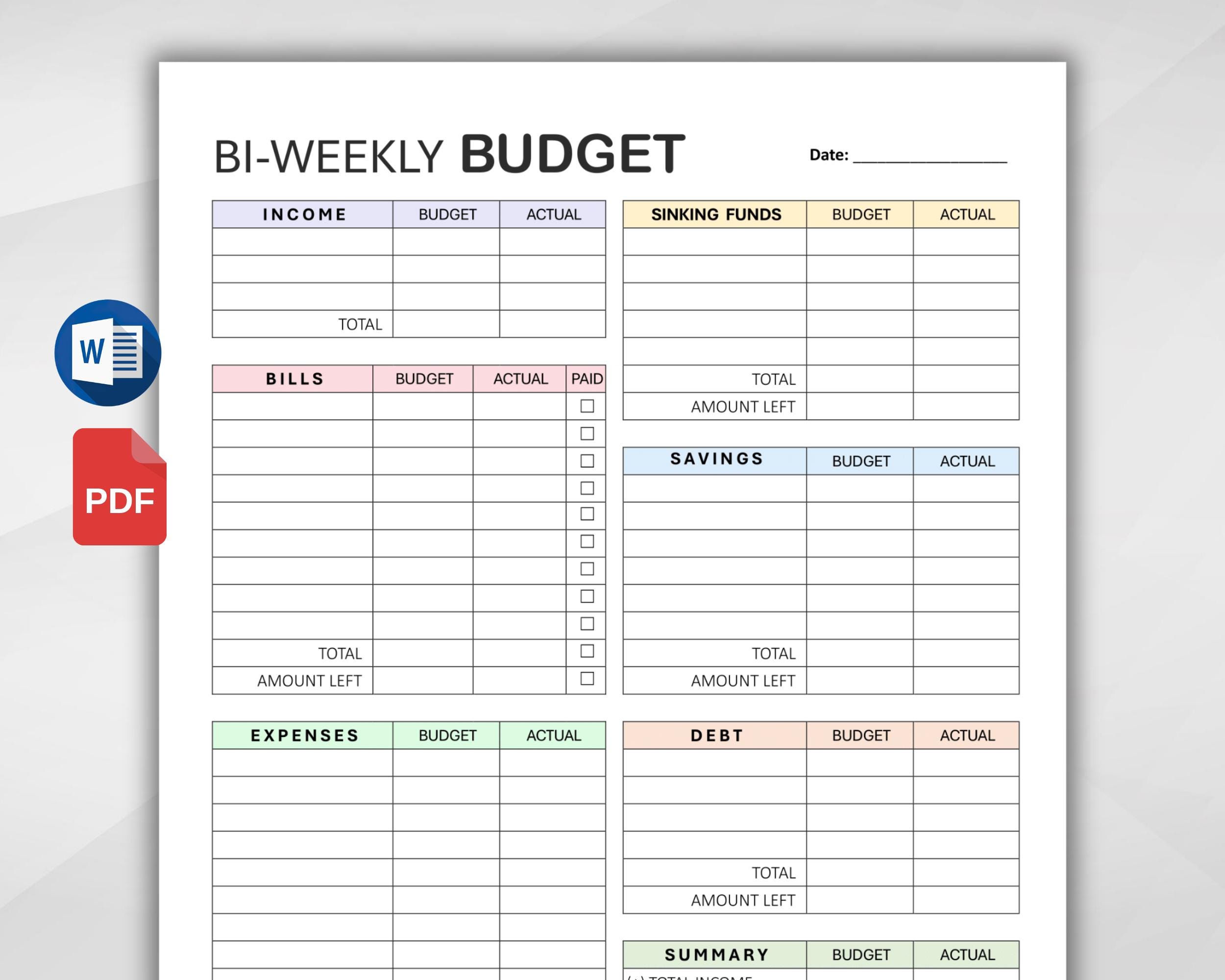
Begin by downloading the Bi-Weekly Personal Budget Worksheet from a reliable resource website. Ensure that the worksheet is in PDF format to avoid any reformatting issues when printing. Standard paper size is typically 8.5 x 11 inches, making it easy to print on most home printers. Using cardstock can be beneficial if you plan to laminate the worksheet for repeated use.
Step 2: Gather Financial Information
Collect all relevant financial documents before filling out the worksheet. This includes recent pay stubs, bank statements, invoices, and any recurring bills. Having this information on hand will provide an accurate picture of your financial situation.
Step 3: Fill in Income Sources
On the worksheet, start by listing all sources of income. This might include salaries, freelance payments, business revenue, and any other forms of income received during the two-week period. Be sure to note down the exact amounts, as this will help in budgeting accurately.
Step 4: List Fixed and Variable Expenses
Next, categorize and list all anticipated expenses. Fixed expenses include rent or mortgage payments, utilities, insurance, and other bills that remain constant each month. Variable expenses may include groceries, entertainment, and discretionary spending. By breaking expenses into these categories, it becomes easier to track spending habits and identify areas for potential savings.
Step 5: Calculate Total Income and Expenses
Once all income and expenses are listed, calculate the total for each category. Subtract total expenses from total income to determine your net income for the two-week period. This figure is crucial for understanding how much money is available for savings or additional spending.
Step 6: Monitor and Adjust
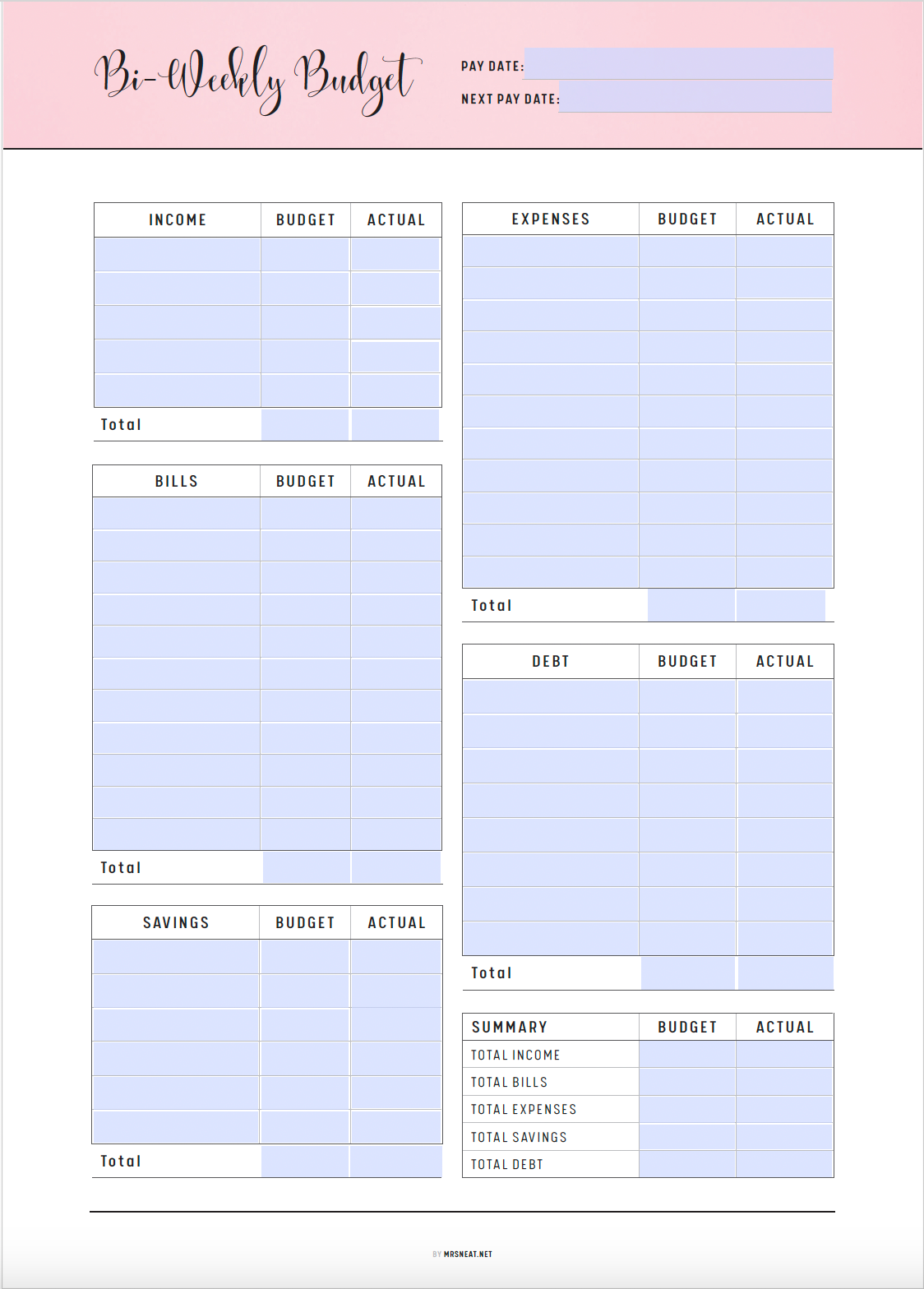
Throughout the two-week period, refer back to the worksheet regularly. Tracking actual spending against your budget will help identify any discrepancies and provide insights into your financial habits. If certain areas are consistently overspent, consider adjusting your budget for the next cycle. This process of monitoring and adjusting is key to effective financial management.
Benefits of Using a Bi-Weekly Personal Budget Worksheet
Using a Bi-Weekly Personal Budget Worksheet offers several advantages. Firstly, it promotes financial awareness, allowing users to see where their money goes and encouraging mindful spending. Secondly, it helps in planning for irregular expenses that may arise, such as car repairs or medical bills, preventing financial surprises.
Another significant benefit is the ability to track progress over time. By regularly updating and reviewing the worksheet, users can visualize their financial journey, making it easier to set goals and achieve them. This can be particularly motivating for small-business owners who are juggling multiple financial responsibilities.
Tips for Successful Budgeting
- Be Realistic: When estimating expenses, be realistic about your spending habits. If you know you tend to overspend in certain categories, account for that in your budget.
- Include Savings: Treat savings as an expense. Allocate a specific amount to save each pay period, even if it’s a small amount. This builds a habit of saving over time.
- Review Regularly: Set aside time at the end of each budgeting cycle to review the worksheet. Analyze what worked well and what didn’t, and adjust accordingly for the next cycle.
- Stay Flexible: Life can be unpredictable, so be prepared to adjust your budget as necessary. Unexpected expenses will arise, and the ability to adapt is essential for financial success.
By following these steps and utilizing the Bi-Weekly Personal Budget Worksheet effectively, anyone can take control of their finances and work towards achieving their financial goals. The key is to remain consistent and proactive in financial planning.
A notable detail to remember is that the worksheet can be reused for each new budgeting cycle, making it a sustainable tool for ongoing financial management.