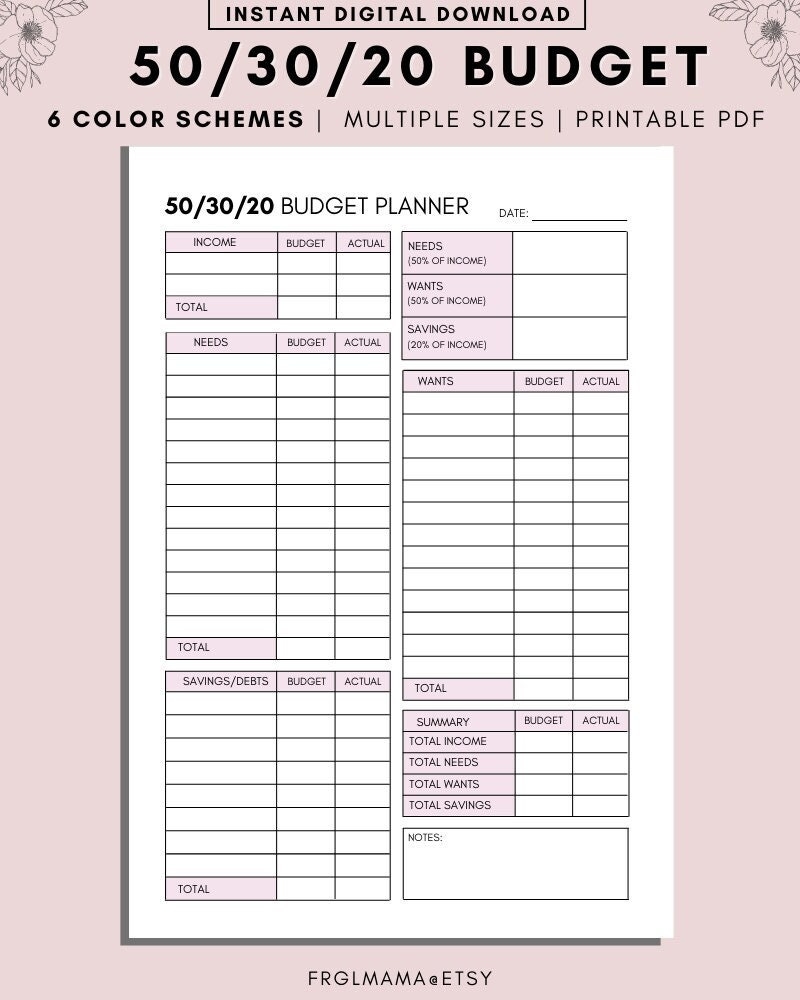
Creating a budget is essential for maintaining financial health, and the 50 30 20 Budget Worksheet is a straightforward tool to help with this process. This method divides your after-tax income into three categories: needs (50%), wants (30%), and savings or debt repayment (20%). Using this worksheet, you can easily visualize your spending and savings goals, allowing for better financial planning.
Understanding the 50 30 20 Rule
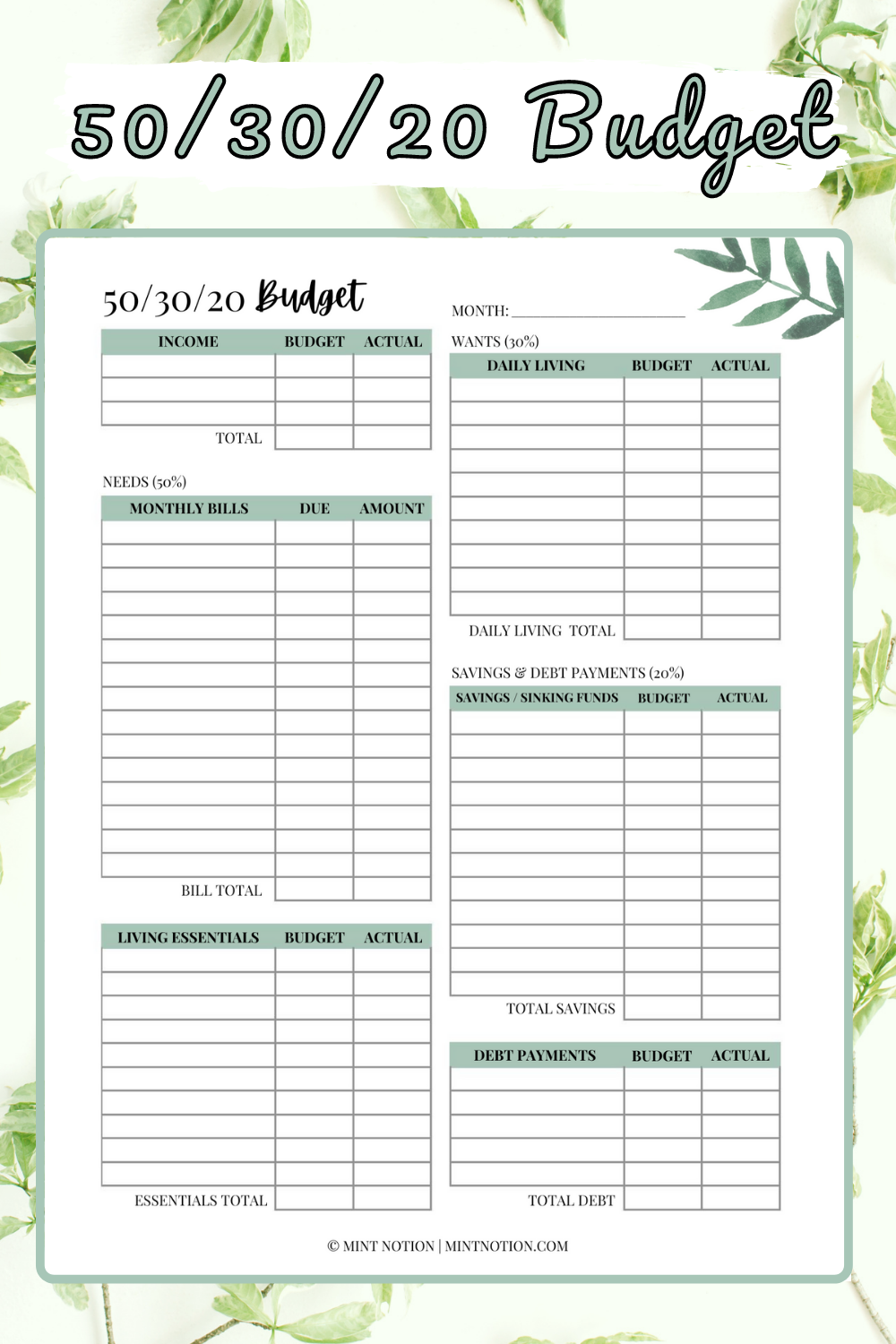
The 50 30 20 budgeting rule is popular because of its simplicity. It allows individuals to prioritize their financial obligations without feeling overwhelmed. Here’s how it breaks down:
- Needs (50%): This category includes all the essentials required for living, such as housing, utilities, groceries, transportation, and healthcare. Evaluating your needs is crucial to ensure that you are not overspending in this area.
- Wants (30%): This section covers additional expenses that enhance your lifestyle but are not necessities, like dining out, entertainment, shopping, and travel. Managing this area wisely helps prevent lifestyle inflation.
- Savings and Debt Repayment (20%): The final portion is aimed at building an emergency fund, saving for retirement, or paying off debts. Allocating funds to this category is vital for long-term financial stability.
When using the 50 30 20 Budget Worksheet, you can easily track these categories, making adjustments as your financial situation changes.
How to Use the 50 30 20 Budget Worksheet
To get started with the 50 30 20 Budget Worksheet, follow these steps:
- Download the Worksheet: Ensure you have a version that is easy to print. A PDF format is recommended as it maintains formatting across different devices.
- Calculate Your After-Tax Income: Determine your monthly take-home pay, which is your income after taxes and other deductions. This figure is crucial as it forms the basis for your budget.
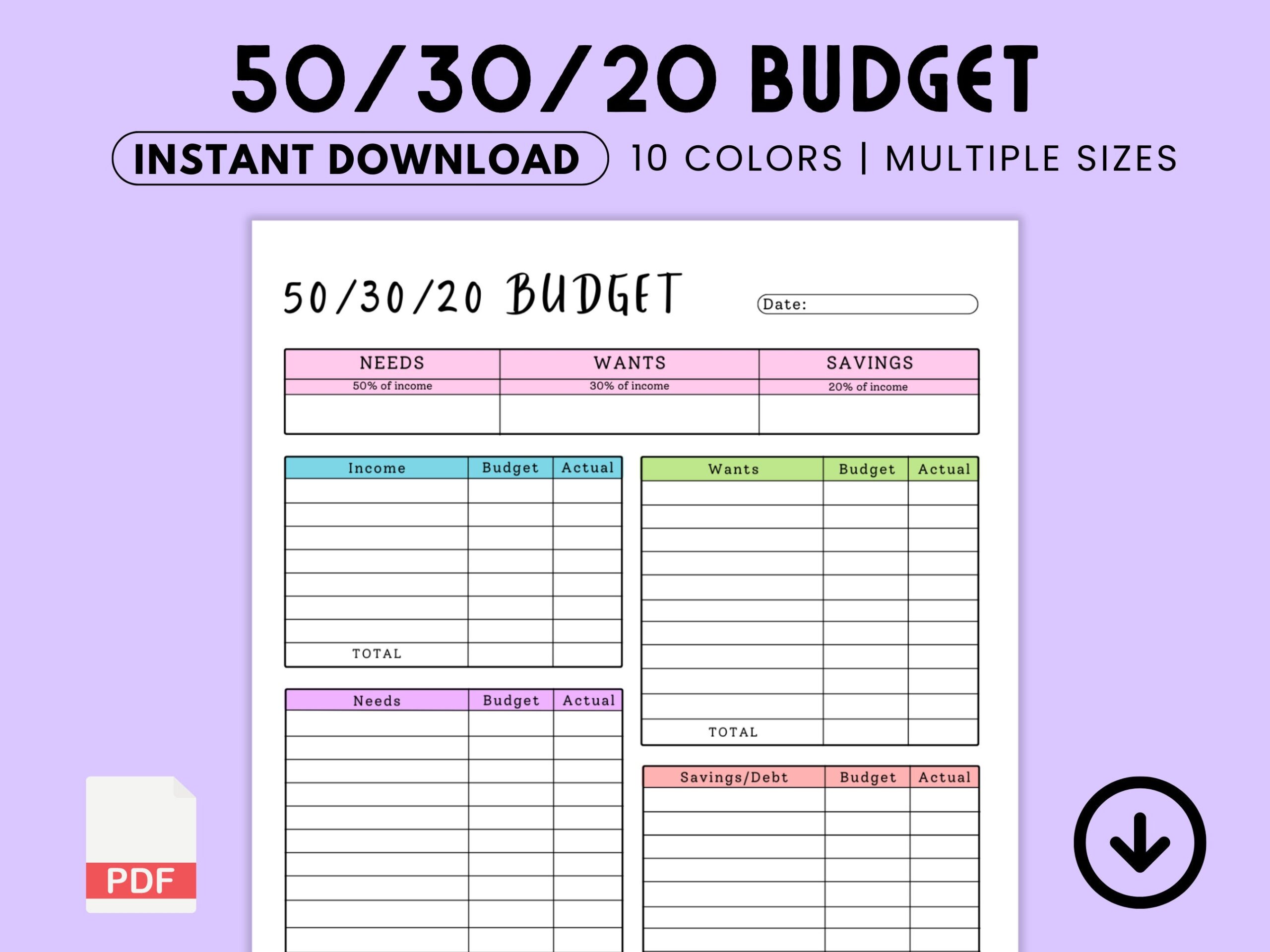
- Fill in the Categories: Using the worksheet, allocate your income into the three categories based on the 50-30-20 rule. You can create line items within each category to track specific expenses.
- Review and Adjust: At the end of each month, review your spending. If you find you’re overspending in one area, adjust your budget or spending habits accordingly.
- Set Financial Goals: Use the worksheet to set short-term and long-term financial goals. This can include saving for a vacation or paying off a credit card.
By regularly updating and reviewing the worksheet, you can keep your finances on track.
Tips for Effective Budgeting With the Worksheet
Maximizing the effectiveness of your 50 30 20 Budget Worksheet involves a few practical strategies:
- Be Realistic: When estimating your needs and wants, be realistic about your spending habits. Consider historical expenses and adjust for any upcoming changes, such as new bills or lifestyle changes.
- Use Separate Sections for Each Month: If you print multiple copies, consider using a new worksheet for each month. This approach helps track changes over time and identify patterns in spending.
- Incorporate Additional Financial Tools: Consider integrating other financial tools, such as expense trackers or savings apps, alongside your worksheet. This can provide a more comprehensive view of your financial health.
- Stay Disciplined: Stick to the budget you set. If you overspend in one category, try to cut back in another to maintain balance.
- Review Regularly: Schedule monthly reviews of your budget. This practice allows you to celebrate successes and reassess areas that require improvement.
Common Challenges and Solutions
While budgeting can be straightforward, challenges may arise. Here are a few common issues and how to tackle them:
- Unexpected Expenses: Life can throw surprises your way, such as car repairs or medical bills. Build a small buffer in your needs category for flexibility.
- Impulse Spending: It’s easy to overspend on wants. Implement a waiting period for non-essential purchases to help curb impulse buying.
- Difficulty in Tracking: If consistently tracking expenses is a challenge, consider using budgeting apps that sync with your bank account to automate the process.
- Resistance to Change: Adapting to a new budgeting method can be difficult. Start slow by focusing on one category at a time until the process feels more natural.
Staying proactive about these potential challenges will enhance the effectiveness of the 50 30 20 Budget Worksheet.