Creating a well-structured budget is a critical skill for college students, especially as they navigate through various expenses like tuition, housing, and daily living costs. A Budget For A College Student Worksheet is designed to simplify this process, providing a practical tool that helps students gain control over their finances. This worksheet typically comes in a user-friendly PDF format, easily printable on standard paper sizes such as 8.5 x 11 inches, making it accessible for immediate use.
Understanding the Layout of the Worksheet
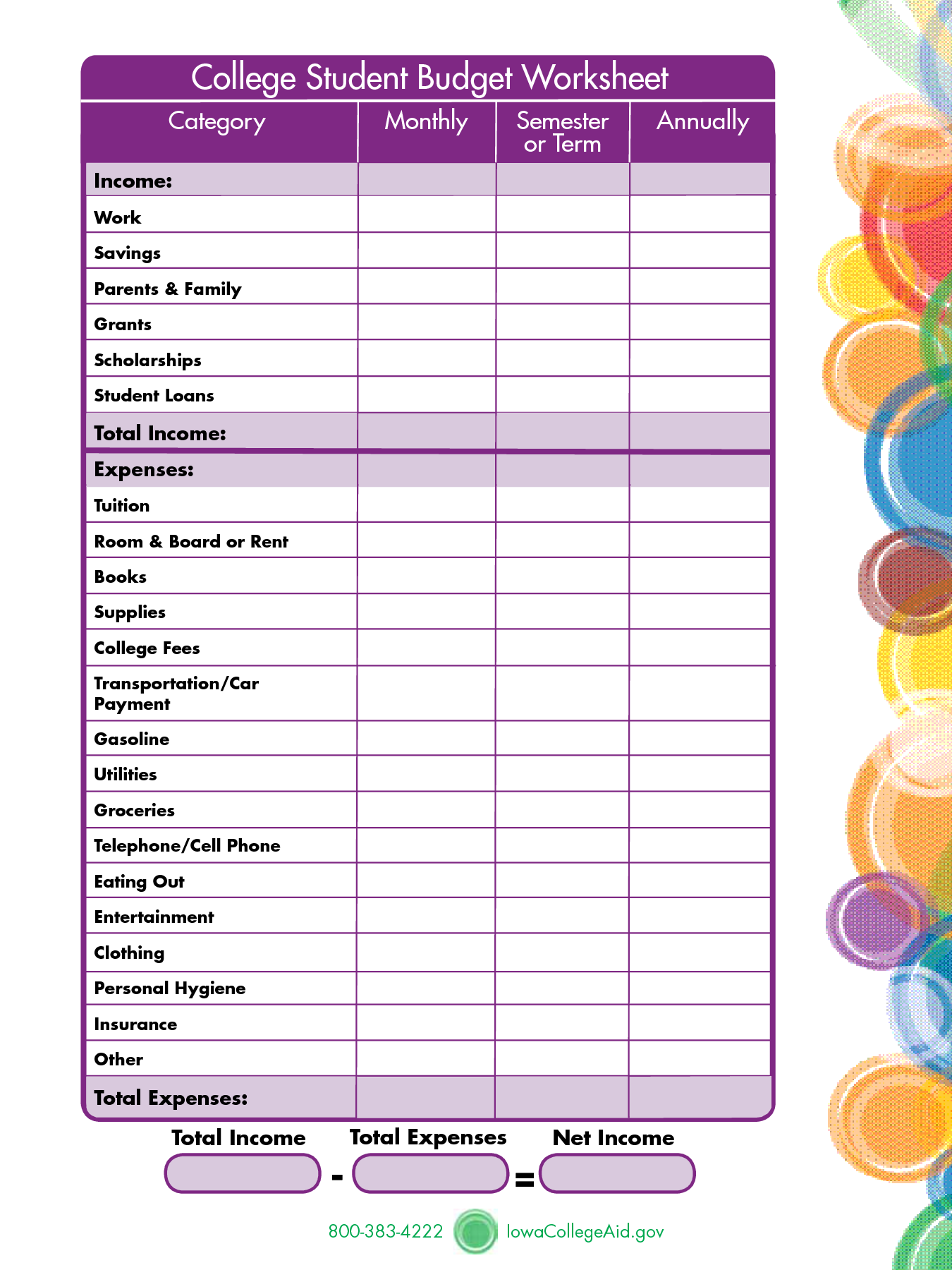
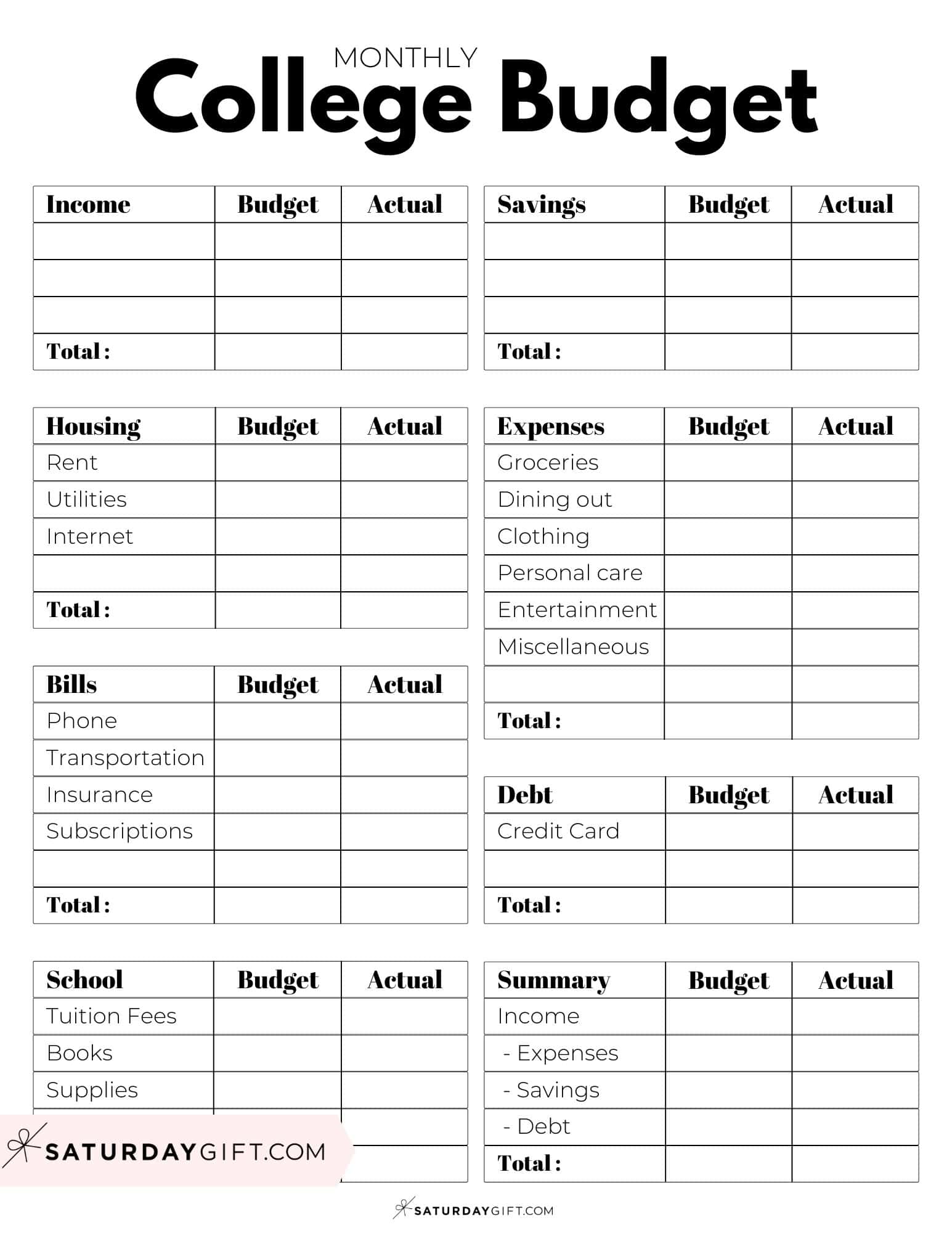
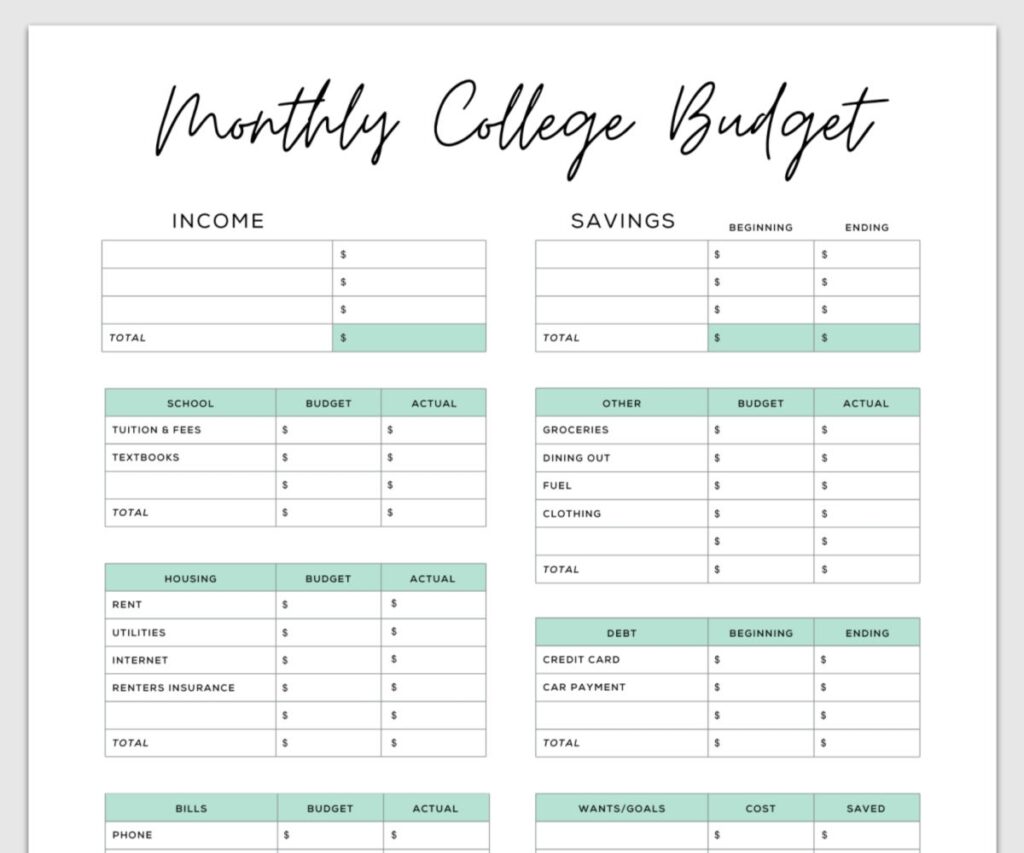
The layout of a Budget For A College Student Worksheet is thoughtfully designed to enhance usability. It generally includes several key sections that help students categorize their income and expenses effectively. Here’s what you might find:
- Income Section: This part is where students can list all sources of income, such as part-time jobs, scholarships, and parental support. It’s often beneficial to break this down into monthly figures for clarity.
- Fixed Expenses: This includes essential costs like tuition, rent, and utilities. By highlighting these as fixed, students can see how much of their budget is already allocated before considering variable expenses.
- Variable Expenses: This section allows students to account for costs that may change from month to month, such as groceries, entertainment, and personal care. This flexibility is vital for accurate financial planning.
- Savings Goals: A dedicated area for savings encourages students to set and track their financial goals, whether for emergencies or future purchases.
- Total Calculation: At the bottom, there’s usually a summary that calculates total income, total expenses, and the remaining balance. This feature helps students quickly assess their financial situation at a glance.
Utilizing the Worksheet Effectively
To get the most out of the Budget For A College Student Worksheet, regular usage is essential. Instead of completing it in one sitting, students should revisit it weekly or monthly. This repetition reinforces financial awareness and helps students adjust their spending habits accordingly.
Weekly Review Sessions
Setting aside time each week to update the worksheet can lead to better budgeting practices. During this review, students should:
- Update Income: Reflect any changes in income, such as new job hours or additional scholarships.
- Adjust Expenses: Modify variable expenses based on actual spending patterns. For example, if dining out was less than expected, that surplus can be redirected to savings.
- Evaluate Savings Goals: Check progress toward savings goals and adjust as needed based on changes in income or unexpected expenses.
This process not only keeps the budget accurate but also promotes financial literacy, as students learn to recognize spending trends and make informed decisions.
Common Mistakes to Avoid
While using the Budget For A College Student Worksheet can be highly beneficial, students often make a few common mistakes that can hinder their budgeting efforts:
- Overlooking Small Expenses: Minor purchases may seem insignificant at the time, but they can add up quickly. Tracking every expense, regardless of size, is crucial for an accurate budget.
- Not Adjusting for Irregular Income: Many college students work part-time jobs with fluctuating hours. It’s important to estimate income conservatively and adjust expenses accordingly to avoid financial strain.
- Neglecting to Save: With the focus often on immediate expenses, students may forget to allocate funds for savings. Setting aside a small percentage of income for savings should be a non-negotiable part of the budget.
By being aware of these pitfalls, students can use their Budget For A College Student Worksheet more effectively.
Integrating Additional Resources
To enhance the budgeting experience, students can consider integrating additional resources alongside their worksheet. Here are some suggestions:
- Financial Apps: Many apps can track expenses and incomes that can complement the worksheet. Linking these tools can provide a comprehensive view of one’s financial health.
- Online Budgeting Calculators: These tools can help students estimate their expenses more accurately, especially when planning for big purchases or irregular expenses.
- Workshops or Financial Counseling: Many colleges offer workshops on financial literacy. Attending these can provide valuable insights and tips to improve budgeting skills.